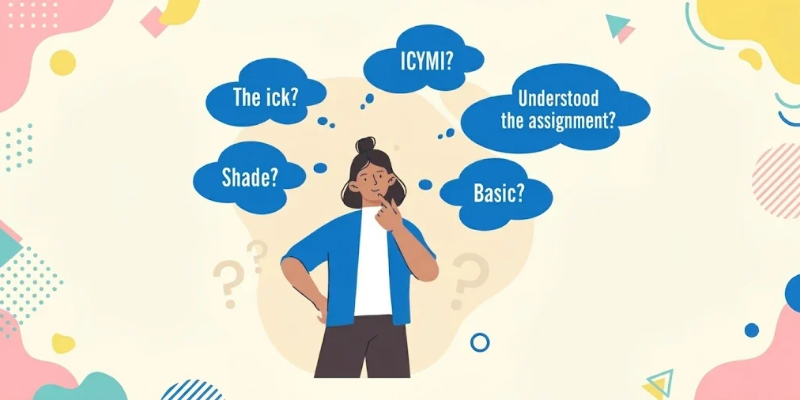
When a conversation fills with terms like “low-key” or “no cap,” it can be hard to follow what younger speakers mean. Learning popular Gen Z slang helps you understand modern conversations, communicate more naturally across generations, and keep up with evolving digital language.
This guide explores popular Gen Z expressions, explains how they work in everyday communication, and compares them with slang associated with Gen Alpha and Millennials. You’ll also find a short quiz to check what you’ve learned.
What Is Gen Z Slang & Why Is It Important to Learn?
Gen Z slang is the casual vocabulary and expressions commonly used by members of Generation Z, generally defined as those born from 1997 to 2012. It includes words, phrases, and abbreviations that can express reactions, opinions, humor, or support in just a few words.
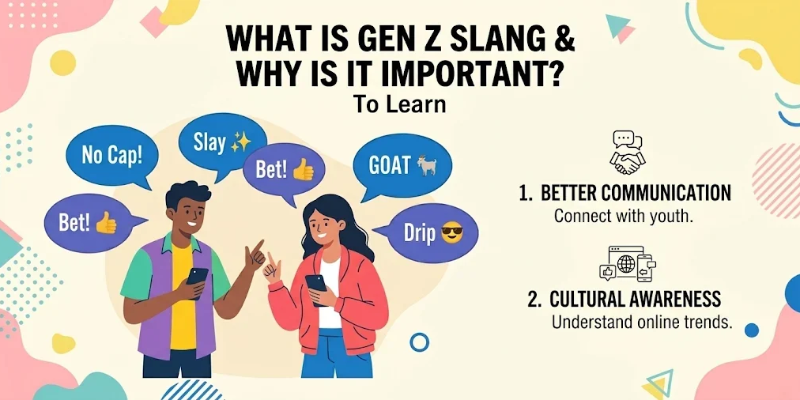
These expressions often spread through social media, online videos, music, group chats, and everyday conversation. Some have roots in Black, LGBTQ+, and other communities, so their histories and meanings can be more complex than a quick definition suggests. Slang also changes quickly: a term may become popular, shift in meaning, or fall out of use.
Social media has helped new terms spread quickly across online communities, while everyday conversations adapt and carry that language beyond the screen. As a result, Gen Z slang is constantly changing rather than forming a fixed list of words.
Why Does It Matter?
Learning about Gen Z slang can make modern communication easier to understand, especially when a phrase carries a meaning that differs from its literal wording.
It can also help people connect more naturally with younger generations by showing awareness of the language they use, without requiring anyone to imitate it. Keeping up with these shifts offers a useful view of how language evolves as people communicate across digital and everyday settings.
Common Gen Z Slang Terms
Gen Z slang covers several kinds of reactions and descriptions. The examples below are grouped by what they do in a conversation, from expressing enthusiasm to signaling objection.
Cool or Impressive Terms
These words convey excitement or praise for an experience, style, idea, or achievement.
| Slang Term | Meaning | Usage Example | What It Doesn’t Mean |
|---|---|---|---|
| Fire | Excellent, exciting, or impressive | “That new song is fire.” | It doesn’t mean something is literally burning. |
| Lit | Fun, lively, or exciting | “The party was lit last night.” | It doesn’t necessarily mean the event involved lights or alcohol. |
| Slay | To do something exceptionally well or look great | “You slayed that presentation.” | It doesn’t mean defeating someone physically. |
| Goated | Among the very best; outstanding | “That goalkeeper is goated.” | It doesn’t mean the person is an actual goat. |
| Ate | Did an excellent job or pulled off a look | “You ate with that outfit.” | It doesn’t refer to eating food in this usage. |
| Iconic | Memorable, distinctive, or impressive | “That scene is iconic.” | It doesn’t mean the moment is famous to everyone. |
| Valid | Good, appealing, or worthy of approval | “Those concert tickets are valid.” | It doesn’t only mean legally or officially accepted. |
| Drip | Stylish clothing or personal style | “Your drip is on point today.” | It doesn’t mean a leak or drops of water. |
| Elite | Exceptionally good or high-quality | “This café makes elite sandwiches.” | It doesn’t necessarily mean exclusive or expensive. |
| Bussin’ | Extremely good, often said about food | “These tacos are bussin’.” | It doesn’t mean something is physically bursting. |
| Hits different | Feels especially good, meaningful, or powerful | “This song hits different on a long drive.” | It doesn’t mean the song is physically striking someone. |
| Go hard | To be especially impressive, energetic, or effective | “That beat goes hard.” | It doesn’t necessarily describe physical force. |
| On point | Exactly right or especially well done | “Your timing was on point.” | It doesn’t mean something is literally on a point. |
| S-tier | Top-tier or among the best | “That’s an S-tier movie.” | It doesn’t mean the item has an official grade. |
| Certified banger | A song or track that’s especially catchy or exciting | “This playlist has another certified banger.” | It doesn’t mean the song has formal certification |
Gen Z Slang for Attractive or Impressive Individuals
Some expressions focus on a person’s charm, confidence, or standout qualities rather than an object or experience.
Gen Z slang can praise someone’s appearance, outfit, confidence, or overall presence. The terms below overlap, but they don’t all mean the person is simply good-looking.
| Slang Term | Meaning | Usage Example | What It Doesn’t Mean |
|---|---|---|---|
| Baddie | A stylish, confident, attractive person. | “She showed up looking like a total baddie.” | It doesn’t mean someone is unfriendly or intimidating. |
| Snack | An attractive person, often said playfully. | “That actor is a snack in this movie.” | It doesn’t mean the person is food or that you know them well. |
| Fine | Very attractive or good-looking. | “He looked fine in that suit.” | It doesn’t necessarily imply romance or interest. |
| Face card | Someone’s facial attractiveness; often used in “face card never declines.” | “Her face card is unreal in every photo.” | It doesn’t mean the person is wearing a literal card or makeup. |
| Serve | To present a striking look or strong style. | “You’re serving red-carpet energy tonight.” | It doesn’t mean the person is literally serving something. |
| Slay | To look great or do something impressively. | “You slayed that outfit.” | It doesn’t mean someone defeated another person. |
| Ate | Did something exceptionally well, often with style. | “He ate that look up.” | It doesn’t mean he literally ate anything. |
| Drip | A person’s fashionable clothes or accessories. | “Your drip is on point today.” | It doesn’t mean the person is physically attractive in every way. |
| Rizz | Charm or flirting skill that makes someone appealing. | “He’s got rizz, and that smile helps.” | It doesn’t mean someone is necessarily handsome or in a relationship. |
| 10/10 | A casual way to call someone exceptionally attractive or impressive. | “That look is a 10/10.” | It isn’t an objective rating or a serious measurement. |
| Gorgeous | Extremely beautiful or handsome. | “You look gorgeous in that color.” | It doesn’t necessarily describe someone’s personality. |
| Stunning | Strikingly attractive or impressive in appearance. | “She looked stunning at the event.” | It doesn’t mean the person caused surprise or shock in a negative way. |
| Iconic | Memorable, distinctive, or admired; can describe someone’s look or presence. | “That jacket is iconic on you.” | It doesn’t mean the person is famous. |
| Main character | Someone with standout confidence or presence, as if they’re at the center of a story. | “You’ve got main-character energy in that outfit.” | It doesn’t mean the person thinks the world revolves around them. |
| Mother | Slang for a powerful, admired woman with strong style or presence. | “She’s mother—the whole look is flawless.” | It doesn’t mean she is literally someone’s parent. |
Gen Z Slang for Agreement/Approval Terms
These short responses let someone show support or acceptance without a long explanation.
| Slang Term | Meaning | Usage Example | What It Doesn’t Mean |
|---|---|---|---|
| Bet | Okay; agreed. | “Meet at the café at six?” “Bet.” | It doesn’t mean someone is placing a wager. |
| Facts | That’s true; I agree. | “That class was harder than I expected.” “Facts.” | It doesn’t mean the speaker is citing formal evidence. |
| Real | I relate, or I agree that something is true. | “I need a quiet night in.” “Real.” | It doesn’t necessarily mean something is literally real. |
| Valid | Reasonable or worthy of approval. | “I’m skipping the party to catch up on sleep.” “Valid.” | It doesn’t mean a decision is officially approved. |
| Say Less | I understand; no more explanation is needed. | “Can you bring your notes tomorrow?” “Say less.” | It doesn’t mean the person wants you to speak less in general. |
| No Cap | Honestly; I’m not exaggerating. | “That was the best sandwich I’ve had, no cap.” | It doesn’t mean the speaker is talking about a hat or cap. |
| For Real | I genuinely agree or mean what I’m saying. | “We should take a break after this.” “For real.” | It doesn’t necessarily mean the conversation is serious or formal. |
| Big Facts | Strong agreement; that’s very true. | “Good friends show up when it matters.” “Big facts.” | It doesn’t mean the speaker is presenting a set of statistics. |
| I’m Down | I’m willing and interested. | “Want to try the new food truck?” “I’m down.” | It doesn’t mean the person is sad or physically low. |
| You Got It | Sure; I’ll take care of that. | “Could you send me the link?” “You got it.” | It doesn’t mean the other person already possesses something. |
| I’m Here for It | I like the idea and support it. | “Let’s do a themed movie night.” “I’m here for it.” | It doesn’t mean the speaker is physically present. |
| This | I strongly relate to or approve of what was just said. | “A day with no notifications sounds perfect.” “This.” | It doesn’t mean the speaker is identifying a specific object. |
| Period | Exactly; that’s final or emphatic agreement. | “We deserve a day off after that week. Period.” | It doesn’t necessarily mean the conversation is over. |
| On God | I mean it; I strongly affirm what I’m saying. | “That playlist is going straight into my favorites, on God.” | It doesn’t mean the speaker is making a literal religious statement. |
| Preach | I strongly agree with what you just said. | “Everyone should get credit for their work.” “Preach.” | It doesn’t mean the speaker is asking someone to give a sermon. |
Gen Z Slang for Disapproval or Criticism
These terms can express disappointment or parody. Because some sound harsh, it helps to consider your relationship with the person and the seriousness of the conversation.
| Slang Term | Meaning | Usage Example | What It Doesn’t Mean |
|---|---|---|---|
| Mid | Mediocre or underwhelming; not especially good. | “The new café was mid, honestly.” | It doesn’t necessarily mean something is terrible. |
| Cringe | Awkward or embarrassing to watch or experience. | “That forced joke was so cringe.” | It doesn’t mean the person meant to embarrass anyone. |
| L | A loss, mistake, or disappointing outcome. | “I missed the bus—big L.” | It doesn’t necessarily refer to a serious failure. |
| Trash | Very poor in quality or not worth much approval. | “The app’s latest update is trash.” | It doesn’t mean the thing is literally garbage. |
| Sus | Suspicious or seeming untrustworthy. | “That excuse sounds sus to me.” | It doesn’t prove that someone did anything wrong. |
| Out of pocket | Inappropriate, excessive, or unexpectedly offensive. | “That comment was out of pocket.” | It doesn’t always mean someone spent too much money. |
| Delulu | Unrealistic or overly hopeful, often in a playful way. | “Thinking he’ll text back after one date is delulu.” | It isn’t a clinical diagnosis or always a serious insult. |
| Flop | Something that fails to impress or succeed. | “The launch party was a flop.” | It doesn’t necessarily mean the people involved are failures. |
| Corny | Uncool, overly sentimental, or trying too hard. | “That pickup line was kind of corny.” | It doesn’t mean the person was being unkind. |
| Ick | A sudden feeling of dislike or loss of attraction. | “He chewed with his mouth open, and I got the ick.” | It doesn’t automatically mean someone is a bad person. |
| Toxic | Harmful or unhealthy in behavior or dynamics. | “The constant put-downs made the group chat toxic.” | It doesn’t simply mean someone is annoying once. |
| Yikes | An expression of discomfort, concern, or disapproval. | “Yikes, that reply came off pretty harsh.” | It doesn’t always mean something disastrous happened. |
| Not it | Unappealing, inappropriate, or not acceptable. | “Making fun of her outfit is not it.” | It doesn’t mean the person literally cannot do something. |
| Pressed | Annoyed or overly bothered about something. | “Why are you so pressed about a harmless joke?” | It doesn’t necessarily mean someone is angry or upset beyond the moment. |
| Be so for real | A pointed way to say something seems unreasonable or unbelievable. | “You want me to redo the whole project tonight? Be so for real.” | It doesn’t always mean the speaker doubts that something is factually true. |
Gen Z Acronyms/Abbreviations
Acronyms save time in texts and online posts. Their tone can depend on the conversation and the relationship between the people messaging.
| Slang Term | Meaning | Usage Example | What It Doesn’t Mean |
|---|---|---|---|
| IYKYK | “If you know, you know”; refers to an inside joke or shared experience. | “That little café has the best late-night fries, IYKYK.” | It doesn’t mean the speaker will explain the reference to everyone. |
| FOMO | “Fear of missing out”; worry that others are having fun without you. | “I have FOMO seeing everyone’s concert videos.” | It doesn’t mean fear of making a mistake. |
| POV | “Point of view”; frames a situation from someone’s perspective. | “POV: You finally sit down and remember the laundry.” | It doesn’t mean “proof of value.” |
| TBH | “To be honest”; introduces a candid thought or opinion. | “TBH, that playlist got me through the whole week.” | It doesn’t necessarily signal criticism or bad news. |
| NGL | “Not gonna lie”; adds emphasis to an honest-sounding remark. | “NGL, I’d watch that movie again.” | It doesn’t mean the speaker is admitting to a lie. |
| FR | “For real”; shows agreement, sincerity, or emphasis. | “That was the best lunch spot, FR.” | It doesn’t mean “Friday” in this context. |
| RN | “Right now”; refers to the present moment. | “I’m finishing my assignment RN.” | It doesn’t mean “registered nurse” in a casual text. |
| IMO | “In my opinion”; marks a personal view. | “IMO, the second season has the better finale.” | It doesn’t present the statement as an established fact. |
| ICYMI | “In case you missed it”; points to something shared earlier or elsewhere. | “ICYMI, the event starts at 6 tonight.” | It doesn’t mean the information is new or exclusive. |
| LMK | “Let me know”; asks someone to respond or share a decision. | “LMK if you want me to save you a seat.” | It doesn’t mean “leave me alone.” |
| ATP | “At this point”; describes how things stand now, often with a hint of exasperation. | “ATP, I’m just glad the group project is done.” | It doesn’t mean “at the present time” in every context; meaning depends on the conversation. |
| WYA | “Where you at?”; asks someone where they are. | “WYA? We’re by the entrance.” | It doesn’t ask what someone is doing. |
| IDK | “I don’t know”; expresses uncertainty or lack of information. | “IDK what time the store closes.” | It doesn’t automatically mean the person is uninterested. |
| TMI | “Too much information”; reacts to details that feel overly personal or graphic. | “TMI—I didn’t need the full story about your dentist visit.” | It doesn’t mean “tell me more.” |
| SMH | “Shaking my head”; expresses disapproval, disbelief, or frustration. | “He forgot his keys again, SMH.” | It doesn’t describe a literal medical condition or necessarily mean anger. |
Gen Z Slang vs. Gen Alpha Slang
Generational slang reflects the media, communities, and online spaces people encounter as they grow up. Gen Z and Gen Alpha overlap in age and influence, so their language blends; no term belongs exclusively to one group.
Gen Z slang blends familiar conversational phrases with expressions shaped by social media, memes, and online communities. It often uses playful exaggeration, irony, and shorthand: “no cap” means “seriously” or “no lie,” “slay” means to do something exceptionally well, and “rizz” refers to charm or flirting skill.
Gen Alpha slang draws heavily on viral videos, gaming culture, and fast-moving online trends. Terms can spread through memes and take on playful or deliberately absurd meanings: “skibidi” is a meme-linked expression often used for comic effect, “sigma” describes a self-reliant or cool persona, and “fanum tax” jokingly means taking some of someone else’s food.
Both generations borrow from internet culture, but their styles often feel different: Gen Z expressions tend to work as conversational shorthand, while Gen Alpha slang is especially tied to viral references and gaming or meme-based humor. Online trends shift quickly, so the meaning and popularity of any term can depend on context.
Differences in Gen Z vs. Gen Alpha Slang
Gen Z came of age as social media and video platforms became central to online life. Gen Alpha, commonly described as the generation born from 2010 onward, has grown up with short-form video, gaming, and internet culture already well established. This can make some of its slang feel more tied to memes, games, or absurd humor.
| Comparison Aspect | Gen Z | Gen Alpha |
|---|---|---|
| Common Style | Gen Z slang often uses playful, expressive terms and irony to communicate reactions, approval, or skepticism. It appears in texts and online posts, sometimes alongside shortened phrases and emojis. | Gen Alpha slang is often highly referential, playful, and shaped by phrases heard in videos and games. Its meaning can depend on a trend or shared online context, so the same expression may sound unfamiliar outside that context. |
| Examples | “No cap” means “no lie” or “seriously”; “slay” signals doing something very well; “rizz” refers to charm or flirting skill. | “Skibidi” is a playful term popularized by viral video culture; “sigma” is used online for a self-reliant or cool persona, often ironically; “gyatt” is an exclamation, commonly about someone’s appearance. |
| How It Spreads | Slang circulates through social media, memes, and online communities, where users adapt phrases and pass them between platforms and everyday conversation. | Viral videos, gaming platforms, memes, and digital trends can quickly introduce phrases to young users. Repetition and remixing help slang spread, and its meanings may shift as trends change. |
These are broad patterns, not rules. People of any age may use a term they encounter online, and a phrase’s meaning can change quickly.
Gen Z Slang vs. Millennial Slang
Millennials, generally those born from 1981 to 1996, formed their informal communication habits through a different mix of internet culture and technology. Their slang often reflects early social media, blogs, and the transition from text messages to always-connected apps.
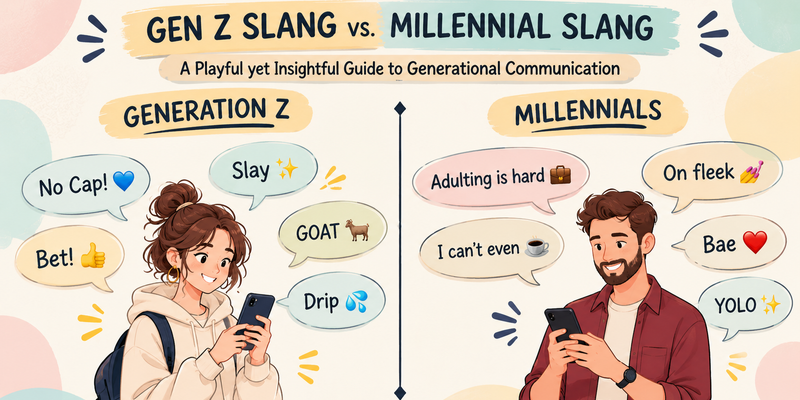
Gen Z slang grows out of today’s internet culture, where social media, memes, and online communities shape the way people communicate. Many of these expressions move quickly from digital conversations into everyday speech. They’re often used in comments, messages, and videos to react, joke, or express a mood.
Millennial slang reflects the rise of early internet culture, when texting and online chats helped popularize new expressions. Pop culture and social media trends also influenced the words and phrases Millennials used. Some of that language became part of everyday conversations, both online and off.
Differences in Gen Z Slang vs. Millennial Slang
Millennial expressions such as adulting—handling ordinary responsibilities like paying bills—often turn everyday stress into humor. Gen Z slang more frequently draws on fast-changing online trends and can use irony or understatement to shape the tone of a message.
| Comparison Aspect | Gen Z | Millennials |
|---|---|---|
| Common Style | Often shaped by fast-moving online trends, irony, remixing, and brief, expressive phrases. Humor may rely on context, memes, or deliberately exaggerated reactions. | Often blends internet shorthand with conversational humor and pop-culture references. Slang commonly moved from online spaces into everyday speech. |
| Examples | No cap means “no lie”; rizz means charm or flirting skill; slay expresses doing something impressively well. | YOLO means “you only live once”; FOMO means fear of missing out; adulting refers humorously to handling grown-up responsibilities. |
| How It Spreads | TikTok videos, memes, social media posts, and online communities can quickly popularize or remix a phrase. | Facebook, Twitter, blogs, pop culture, and early internet communities helped circulate phrases, which often spread through posts and shared references. |
Gen Z Slang Quiz – Test What You Learned
Choose the best answer for each question.
- If a friend says, “Bet, see you at seven,” what do they mean?
A. They are unsure
B. They agree or accept the plan
C. They are leaving early
D. They want to change the subject - What does it mean if a song is called a “banger”?
A. It is especially enjoyable or energetic
B. It is difficult to understand
C. It is very old
D. It is too quiet to hear - Which abbreviation means “to be honest”?
A. IYKYK
B. FOMO
C. TBH
D. NGL - If someone calls a performance “mid,” what are they saying?
A. It was excellent
B. It was average or unimpressive
C. It was surprising
D. It was confusing - What does “rizz” refer to?
A. A person’s charisma or charm
B. A shared secret
C. A fear of missing out
D. A type of music
Gen Z Quiz Results
Give yourself one point for each correct answer.
- 5 correct: You understand the featured terms well and can recognize them in context.
- 3–4 correct: You have a solid start; revisiting a few categories may help.
- 0–2 correct: Slang takes practice. Try noticing how people use these expressions in real conversations, rather than memorizing definitions alone.
Answer key: 1-B, 2-A, 3-C, 4-B, 5-A.
Explore more: MBN Meaning, Best Educational Quotes
Conclusion
Understanding Gen Z slang offers more than a way to keep up with new phrases—it provides a window into how younger generations communicate and how internet culture shapes everyday language.
Learning the meaning behind these expressions can help you follow conversations and connect more naturally, while paying attention to context keeps your language genuine and appropriate. Start by noticing how people use Gen Z slang, then use it thoughtfully when it fits.
FAQS
Does Gen Z slang mean the same thing everywhere?
Not always. Meaning can vary by region, community, platform, and tone. A term may be used sincerely in one conversation and sarcastically in another, so context matters.
Is it okay for adults to use Gen Z slang?
Yes, if it feels natural and fits the situation. Trying to use several trendy words at once can sound forced, while a well-understood term used appropriately is unlikely to cause confusion.
What generation are Baby Boomers?
Baby Boomers are commonly defined as people born from 1946 to 1964, following the end of World War II. Gen Z is generally defined as those born from 1997 to 2012. Baby Boomers are therefore an older generation, separated from Gen Z by several decades and different experiences of technology, culture, and communication.